
What defines a great society? Is it the proper maintenance of the infrastructure? It should be the behavior of the people? It surely is the freedom the society provides? Well, all these things have the flow of information to thank for. The proper flow of information from one place to another, followed by the actions people take to address the information, be it a pipe leakage, a lost dog or a birthday party.
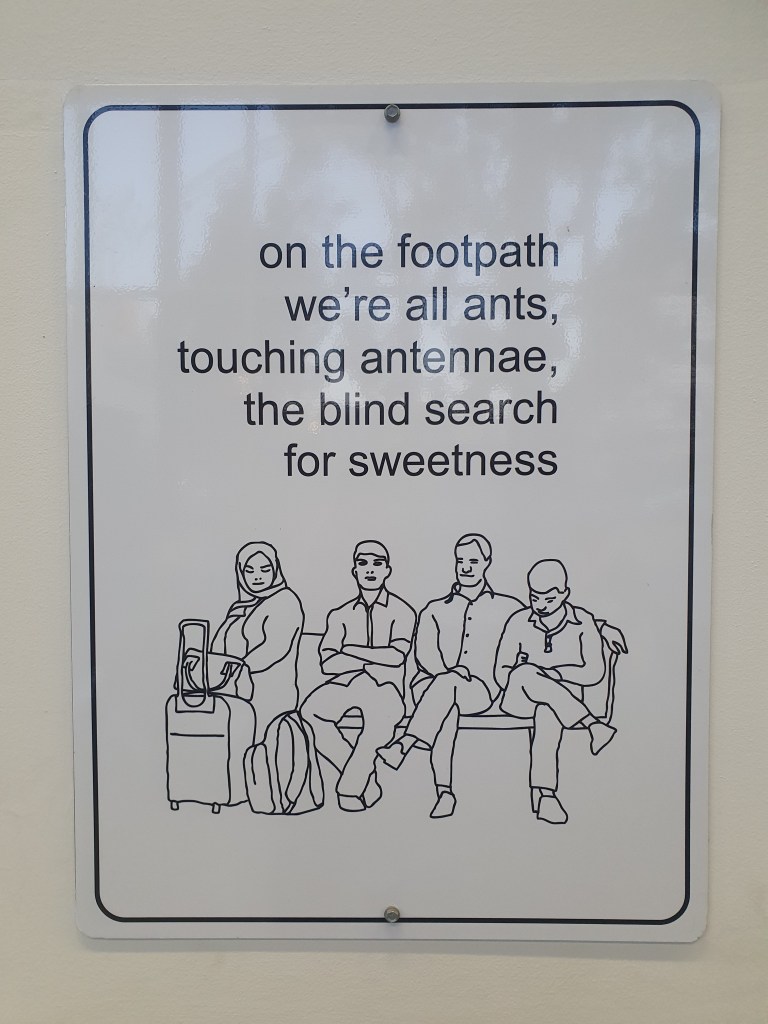
The same goes for any society, be it of any scale, irrespective of whom the society is occupied of. The flora and fauna in the tropical ecosystems exchange information at a large scale, much of which we are still discovering, and what is discovered has yet to be understood properly.
Ants, found in all continents except Antarctica, create large colonies which can consist of millions of ants. Being so successful in doing so, must require a multi-layered information sharing. To understand it, we must understand how the signal is “sent” either from ants, or other organisms they interact with, as well as how to “receive” signals from their environment.
But what are these communication methods even used for? Seems easy on surface, but it needs to be defined why such communication methods have evolved and how do they help the colony. Myrmecologists have studied ants for a long time, and have provided few broad categories on the “Why to communicate?” (Taken from The Ants by Hölldobler and Wilson Read more: https://www.antwiki.org/wiki/The_Ants)
- Alarm(ENEMY!!!).
- Simple attraction.
- Recruitment, for new food and nest site.
- Grooming, and assistance at molting.
- Trophallaxis (exchange of oral and anal liquid).
- Exchange of solid food.
- Group effect: to facilitate and inhibit a given activity
- Recognition, of nest-mates, and to distinguish injured and dead members. And also of those enemies who do not belong.
- Caste determination, similar to recognition, but to differentiate who does what: worker, queens, soldiers and so on.
- Control of the competing reproductives
- Territorial and home range signal, just like we know that larger mammals do.
- Sexual communication, Are you of the same species? Which sex? Are you a competitor? Do we come from same or different colonies?
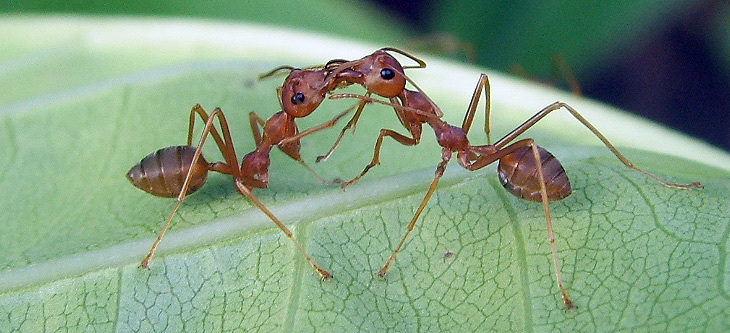
Ants utilize not one, but many ways to express these requirements mentioned above, these include chemical, tactile, acoustical and visual communication. Where it could be as simple as a release of a single chemical to alert the nest-mates, or a longer ritual which needs to be done to recruit fellow members for a task.
These methods, have evolved over millions of years, but these can also be exploited by ants of other species and by other insects and plants to either seek help from ants, or to fool them and make them slaves.
On the other hand, there are levels to these. Some happen between worker to worker, such as colony odor, caste odor, casual antennal (antennating) or bodily contact, etc., some between queen to worker such as queen recognition pheromones, or between queen to queen like dealation inhibiting pheromones and so on.
In the next blog we will go over different kinds of communications in details, starting with chemical communication and discuss about the different glands, venom and how they are expressed in different scenarios.


Leave a Reply